

I had a viral tweet yesterday discussing Usain Bolts anterior pelvic tilt.

The fastest human being to ever walk the planet, the man who redefined what we thought was physically possible, had two of the most “dysfunctional” postural presentations according to every “corrective exercise specialist” on the internet.
Eight Olympic gold medals.
Eleven World Championships.
World records that still stand today.
All while walking around with a posture that would make your local physical therapist write a 47-point corrective exercise program.
Here’s what nobody wants to tell you: basically every explosive, powerful athlete on earth presents with varying degrees of anterior pelvic tilt.
Lebron James ? Anterior Pelvic Tilt (APT).
Yet he’s one arguably the most durable basketball player of all time (23 seasons in one of the most demanding sporting leagues on the planet).
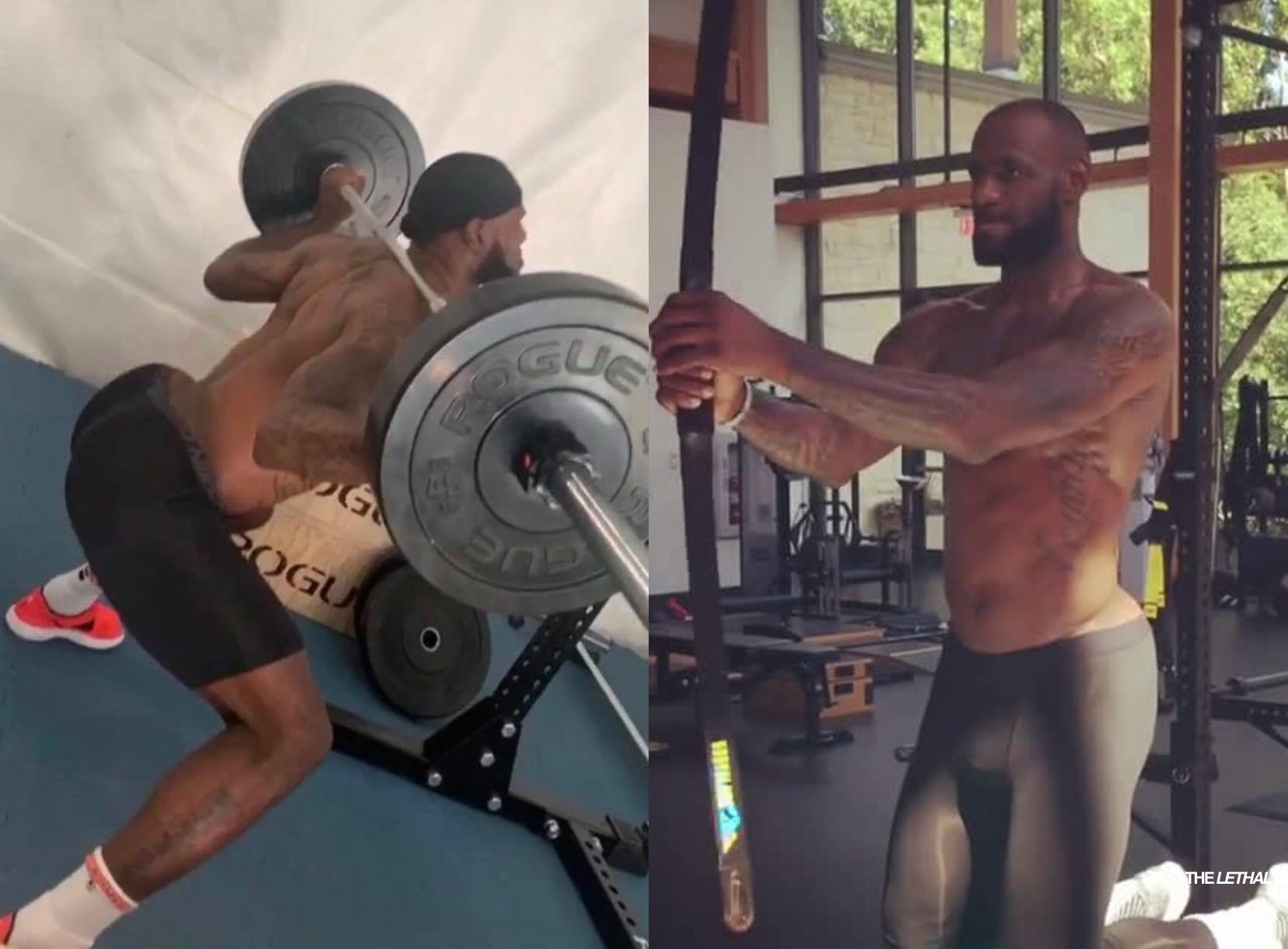
There are so many examples, particularly explosive athletes, who have this ‘dysfunction’ yet perform at the absolute highest echelons of human performance.
Yet somehow, the corrective exercise industry has convinced millions of men that their anterior pelvic tilt is a “dysfunction” that needs to be fixed with endless hip flexor stretches, glute bridges, and core activation drills (which don’t even do shit by the way).
Meanwhile, the most powerful athletes in the world are making millions of dollars with the exact same “dysfunctional” posture.
Something doesn’t add up.
In this article, I’m going to show you why anterior pelvic tilt has been pathologized by an industry that profits from selling you solutions to problems you don’t have.
I’ll show you what the research actually says (not what Instagram physios cherry-pick).
And I’ll give you the only approach that actually matters: learning to CONTROL your pelvis, not trying to “fix” its resting position.
The corrective exercise industry has bullshitted you long enough...
Let’s fix that.
THE BENEFITS OF ANTERIOR PELVIC TILT
Let’s talk about why every explosive athlete on earth has anterior pelvic tilt.
It’s not despite their performance. It’s part of what enables it.
POWERFUL EXTENSION

APT is part of a very powerful movement pattern called global extension.
The ability to extend aggressively through the glutes and low back gives sprinters a massive advantage when it comes to producing maximal force.
Think about what happens during a sprint: your hip explosively extends, driving your leg back and propelling you forward. Your glutes fire hard. Your lower back extends. Your entire posterior chain works as a coordinated unit to generate force.
APT positions your pelvis to optimize this exact pattern.
When Usain Bolt is accelerating out of the blocks, he’s not thinking about maintaining a neutral pelvis. He’s driving into maximum hip extension with his entire posterior chain firing in sync. His anterior pelvic tilt facilitates this.
This assists with any acceleration-based task in any sport or movement pattern:
Sprinting (obviously)
Jumping (vertical or horizontal)
Change of direction (cutting, pivoting)
Explosive starts (first step in basketball, football)
Rotational power (throwing, striking)
The common thread? All of these movements require maximum hip extension force. APT creates the positional advantage to generate it.
MECHANICAL TENSION & ELASTIC RECOIL
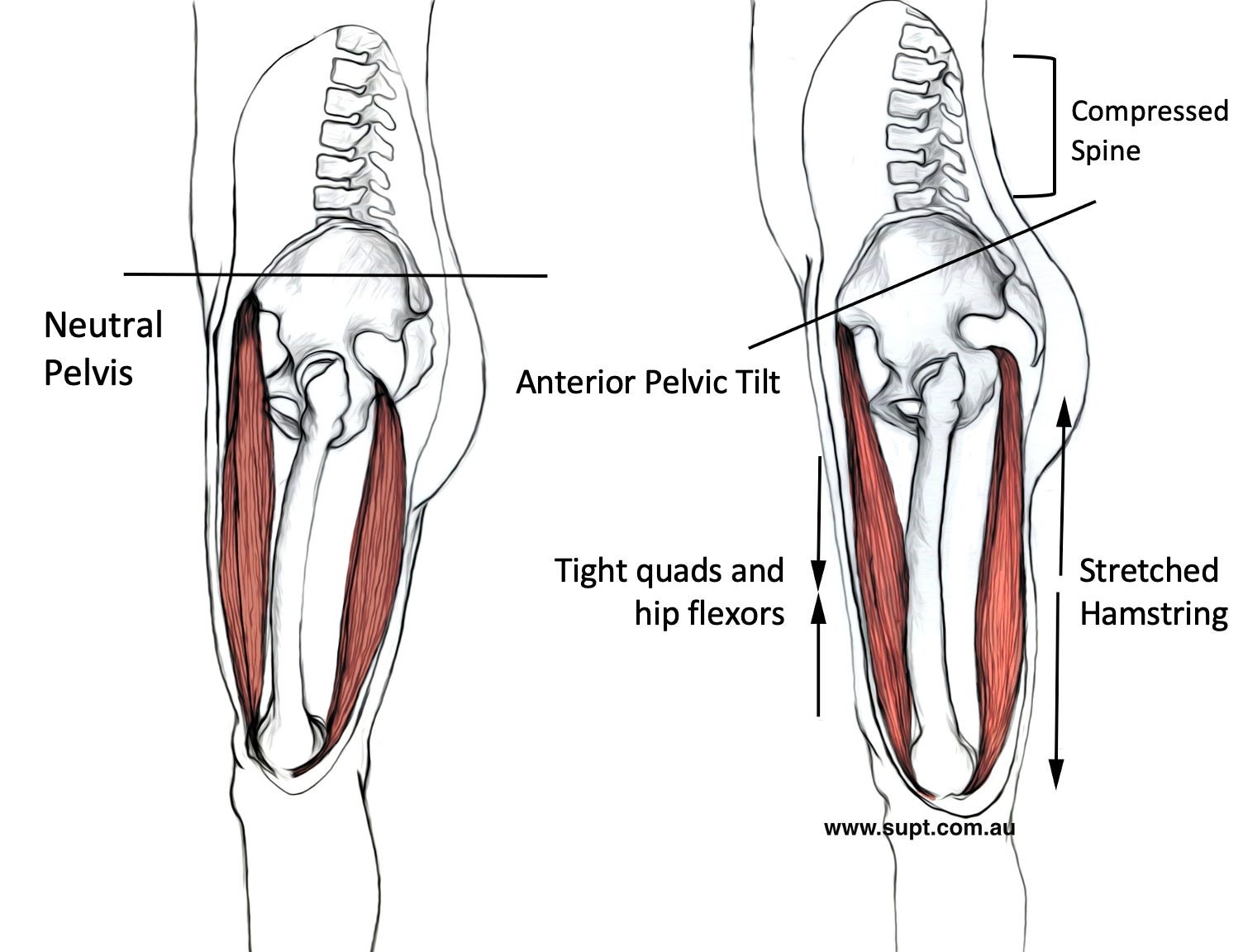
Here’s where it gets interesting from a biomechanics perspective.
Anterior tilt places certain tissues, hip flexors, abdominals, hamstrings, in a lengthened position. This creates higher elastic recoil and stiffness through the trunk-pelvis segment.
But here’s the critical part: if the athlete has adequate strength to control it.
This is the difference between an elite sprinter with APT and an untrained person with APT.
The sprinter has built massive strength through their posterior chain, core, and hip flexors. They can control that lengthened position and use it to generate elastic energy.
The untrained person? They’re just hanging out in that position with no strength to harness the mechanical advantage.
Sprinters have notoriously ‘tight’ hamstrings, and this is a feature, not a bug.

The fitness industry will tell you that tight hamstrings are bad. That you need to stretch them constantly. That they’re causing your APT.
Wrong.
Sprinters need stiff hamstrings. Overly lengthened, loose hamstrings are disadvantageous when it comes to explosive power development.
That stiffness creates the spring-like quality that allows them to generate massive force in minimal ground contact time. It’s not a dysfunction, it’s a sport-specific adaptation.
This is why you don’t see elite sprinters doing 30-minute hamstring stretching sessions before races. They need that stiffness to perform.
FORWARD MOMENTUM & PROPULSION
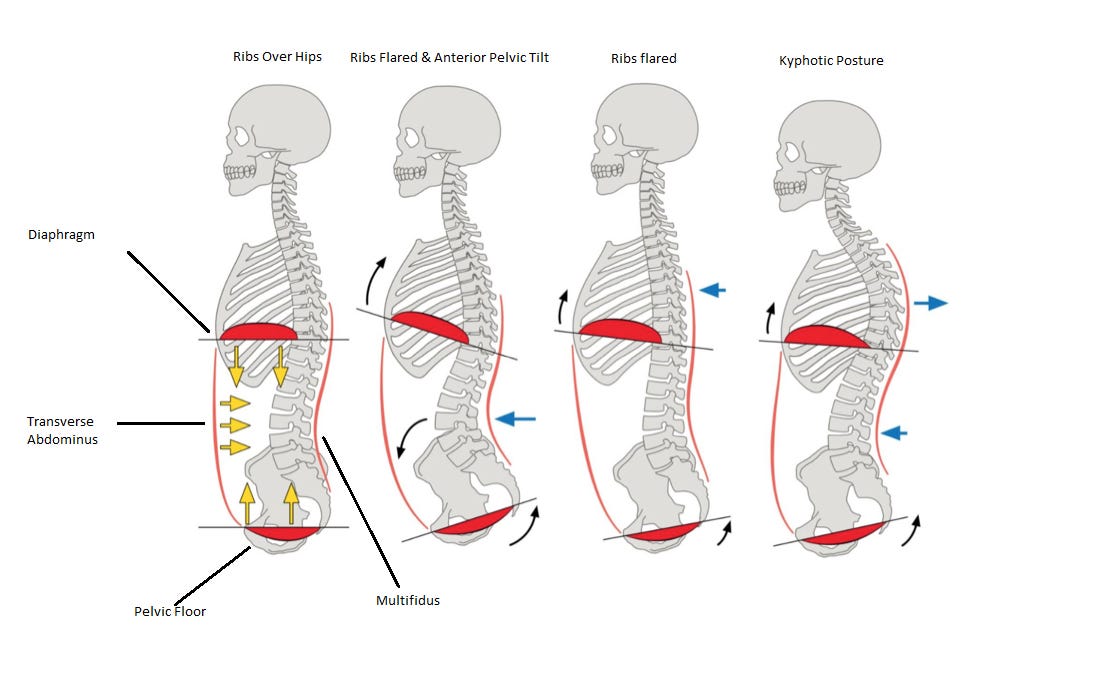
Anterior pelvic tilt and low back extension force the rib cage forward into a propulsion-based position.
You see this particularly in Cristiano Ronaldo’s running mechanics.
Are his mechanics perfect? No. He’s not a track athlete, he’s a footballer.
But what he does exceptionally well is “lead” with his sternum and ribcage, allowing himself to maximally propel forward.
His anterior pelvic tilt positions his torso in a way that his entire upper body is driving forward. He’s not upright and neutral, he’s tilted into the direction of movement, using his posture to enhance forward propulsion.
This is common across explosive athletes:
Sprinters lean forward out of the blocks
Running backs in football drive forward with chest leading
Basketball players attacking the rim project their torso forward
That forward torso position is directly connected to anterior pelvic tilt. You can’t have one without the other.
Try this experiment: stand up right now. Posteriorly tilt your pelvis (tuck your tailbone under). Notice what happens to your ribcage, it drops back. You’re now in a more upright, vertical position.
Now anterior tilt your pelvis. Your ribcage projects forward. You’re in a propulsion-oriented position.
Which position do you think generates more forward momentum?
WHAT THE RESEARCH SHOWS ABOUT APT
The corrective exercise industry has built an empire on a lie.
They’ve convinced you that anterior pelvic tilt causes pain and can be “fixed” with the right exercises.
The actual research tells a completely different story.
YOUR PELVIC TILT IS GENETIC
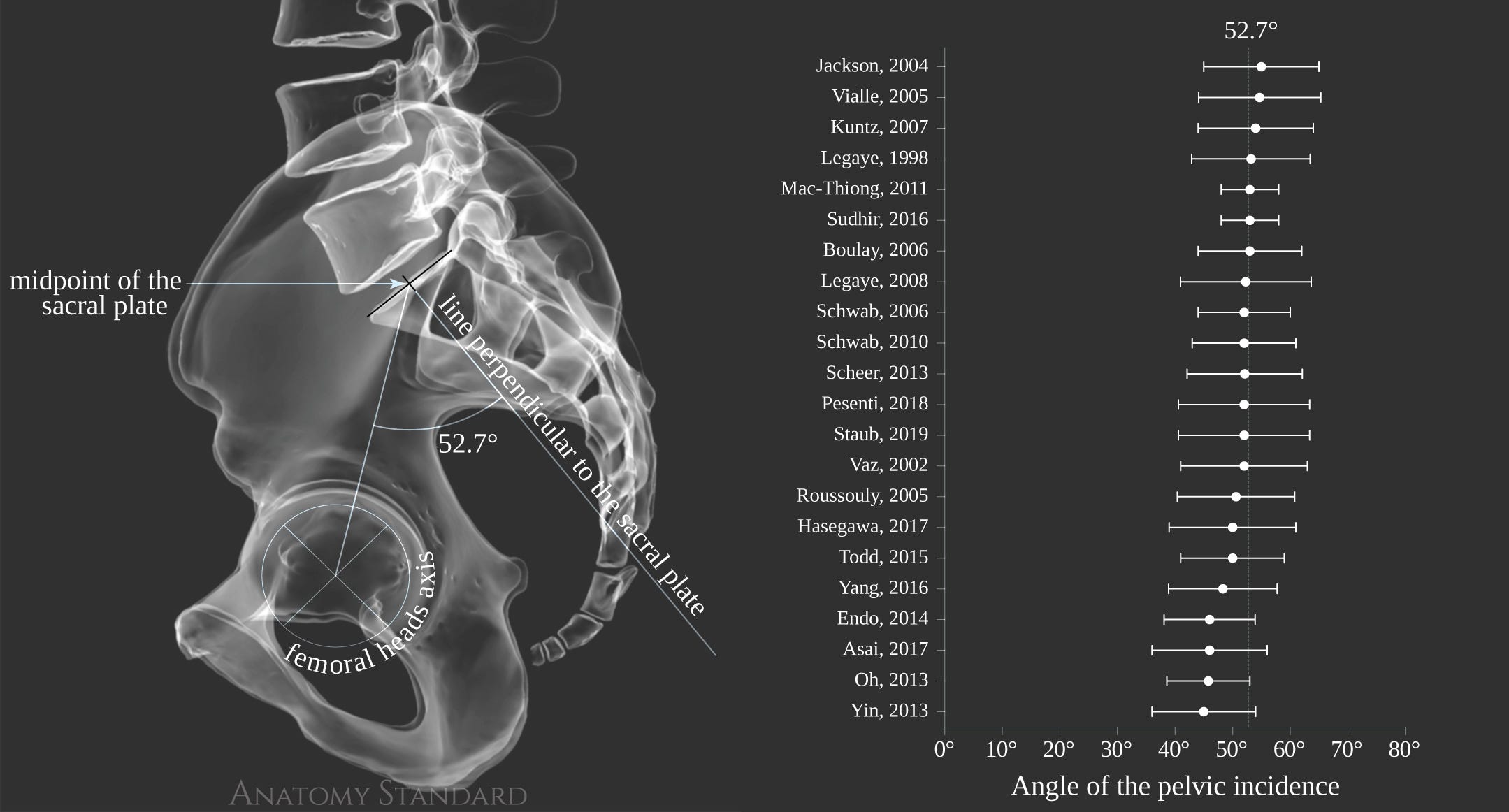
Your pelvic position is largely determined by something called Pelvic Incidence, a fixed anatomical angle set by your bone structure.
This angle doesn’t change after skeletal maturity. You can’t exercise it away.
If you’re born with a high Pelvic Incidence (above 55 degrees), your body must adopt more anterior tilt to maintain upright posture [1]. Trying to “neutralize” your pelvis is fighting against your skeleton.
This is like trying to exercise away your height.
APT DOESN’T CAUSE PAIN
Study 1: Research on pain-free populations shows 85% of men have anterior pelvic tilt [2]. The average “normal” position is 6-13 degrees of anterior tilt. True neutral (0 degrees) basically doesn’t exist [3].
If 85% of pain-free men have APT, how is it causing pain?
YOU CAN’T “FIX” IT ANYWAY
Randomized controlled trials on intensive corrective exercise programs found that resting pelvic tilt changed by less than 2 degrees after weeks of training [4].
Two degrees. Clinically irrelevant. Within measurement error.
You could spend six months doing daily glute bridges and hip flexor stretches and achieve essentially nothing in terms of your resting posture.
Why? You cannot strengthen bone into a new position.
WHEN APT ACTUALLY MATTERS
Here’s what the corrective exercise industry gets wrong: static pelvic position isn’t the problem. Lack of pelvic control is.
APT can place more load on certain structures, particularly the lower back and anterior hip (labrum, anterior hip joint). But this only becomes problematic if you’re “stuck” in that position and can’t move out of it when needed.
The issue isn’t your resting posture. The issue is whether you can:
Posteriorly tilt your pelvis during a squat
Maintain neutral spine under load during a deadlift
Move through your full pelvic range during daily activities
I’ve never seen anyone who is truly “stuck” in anterior pelvic tilt.
Sure, it might be your default resting position. But there’s nothing stopping you from learning to move your pelvis into different positions, just like everyone else.
Elite athletes with APT have excellent pelvic control. They can move through their full range when needed. Their static posture is irrelevant because their dynamic movement quality is exceptional.
The solution isn’t trying to change your resting posture. It’s learning to control your pelvis through movement.
HOW TO CONTROL YOUR PELVIS
(NOT FIX IT)
The goal here isn’t to eliminate your anterior pelvic tilt. It’s to teach your body to move through its full pelvic range when needed.
These aren’t “corrective exercises” designed to fix your dysfunction. They’re movement education drills that teach you to access ranges you might not currently have control over.
If you can already move your pelvis through its full range without restriction, you don’t need these. But if you find yourself stuck in one position, or if certain movements feel blocked…
These 5 drills will help you master this control…
DRILL 1: ANTERIOR LOADED SQUATS
To execute this we are going to:
Elevate the heels: allows deeper range of motion & minimises ankle dorsiflexion requirements.
Anterior load: Hold a weighted object in front of the body, allows us to ‘sit back’ & forces pelvis to get into posterior tilt position by proxy
Move through squat range: ensures we have legitimate dynamic control through an ultra functional movement like the squat.